Research project
Machine learning model for predicting Peste des Petits Ruminants (TokomezaPPR)
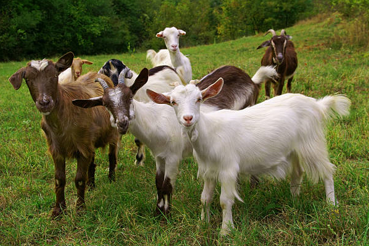
On farm disease management and surveillance systems has been a significant challenge among stakeholders in the livestock domain. To date, the Peste des petits ruminants (PPR) has been a great challenge to livestock keepers, specifically small ruminants. It is an acute or subacute viral disease of goats and sheep characterized by fever, necrotic stomatitis, gastroenteritis, pneumonia, and sometimes death. Despite of having many solutions to counter this disease still, there is a challenge in the detection of the disease using the symptoms. The Lab engaged various stakeholders to identify a viable solution that will be integrated into the surveillance process for the disease by the Tanzania Directorate of Veterinary Services.
Clinical signs include fever, respiratory distress, and diarrhea, and prevention is primarily through vaccination with a live attenuated vaccine. In this study, 24 samples were selected, pre-processed, and synthesized using the Conditional Tabular Generative Adversarial Networks (CTGAN) model. Feature extraction was performed, revealing difficult breathing as the most important feature in predicting PPR in ruminants. The study used a Random Forest Classifier which was fine-tuned using Bayesian Optimization to attain an accuracy of 91%.
A reporting and surveillance module is being implemented to allow early reporting of the disease to the Tanzania Directorate of Veterinary Services. Upon successful deployment, the AI-based tool will be handy in supporting the efforts to eradicate the disease at a Global scale by 2030.
How it works
Origin
The tool was developed through collaboration between researchers at AfriAI Lab and veterinary experts. It leverages data based on clinical symptoms, and machine learning techniques.
Technology
The tool uses machine learning algorithms (supervised learning models) to analyze disease patterns and clinical data.
How it works, step by step
Field vet input observable clinical symptoms of livestock (e.g., fever, nasal discharge) through a web-based interface.
The tool cleans and processes the input data to ensure consistency.
The AI tool applies a trained machine learning model to analyze the symptoms and combines results with a python function to predict the likelihood of PPR.
The tool provides a prediction score of PPR or likeliness of other similar diseases like Blue tongue or CBPP.
Surveillance of PPR detected points.
Data
Data sources
Clinical data records of infected and healthy livestocks.
Data quality and validation
Data was cross referenced with veterinary expert to ensure accuracy and categorized into positive and negative cases to train the model.
Inputs
Observable clinical symptoms (temperature, nasal discharge, mouth sores, difficult breathing, diarhhea, eye discharge, oral nasal lesion).
Outputs
The prediction whether positive or negative PPR. Positive PPR has the prediction score while negative is accompanied with the indication of presence of Blue tongue or CPBB.
Who it helps
Primary users
Veterinarians and farmers.
Recommendations it gives
Not to the farmer.
Efficiency gains
Unlike traditional methods, which requires sending samples to distant laboratories, the AI tool offers immediate predictions in the field hence proving to more efficient.
Time saved
Traditionally it can take more than 3 days because of sampling, transportation and clinical testing but the AI tool takes less than 1 minute.
Improved access to services
The AI tool can be used by all vets and farmers even those with limitations/shortage in diagnostic facilities.
Evaluation and limitations
Accuracy
The current accuracy rate is 91% although it may vary depending on how the system is inputted or reported.
Testing
Conducting field trials across multiple regions.
More domain experts to be engaged in testing and validation.
A feedback loop to improve the model.
Current limitations
Availability of sufficient and high quality data to retrain the model so that it performs better.
It requires Internet connectivity to be used.
Not yet available in other languages that are common to farmers like Swahili and vernacular languages.
Technical challenges
Symptoms variability when the different breeds of sheep and goats manifest the symptoms differently
Software or hardware bugs can impact functionality.
Environmental factors being dominant such that the model will need retraining.
Known discrepancies
An experienced veterinarian can interpret a vague symptom better than an AI tool.
Environmental factors can highly impact AI accuracy than human diagnosis.
Handling discrepancies
Model training data
Algorithmic limitations
Performance monitoring
Retraining with new data
Incorporating feedback to refine the tool.
Evaluation questions
How accurately does the AI tool predict compared to traditional methods?
How reliable is the tool across different regions?
What is the rate of false positive and false negatives in the field conditions?
Impact
Practical applications
Disease prevention through timely detection and surveillance.
Support for decision-making
Facilitate data driven insights so that the policies and strategies can be enforced well.
Allow for interventions to be sent to the needed areas.
Scaling opportunities
Cost reduction for the diagnosis of the disease.
Food security improved by mitigating disease impact.
Next steps
Long-term goals
Contribute to facilitate global eradication of PPR.
Planned features
Recommendations feature
Multilingual feature
Partnerships
Research collaborations to collect diverse datasets and improve the AI tool.
Government support to incorporate the tool in DVS disease management systems
Access
Demonstration
Yes
User guidelines
Yes