Mradi wa utafiti
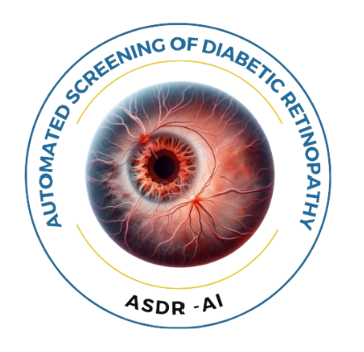
Automated Screening of Diabetic Retinopathy (DR) Using Artificial Intelligence (ASDR-AI)
The global prevalence of diabetes has surged from 108 million in 1980 to 422 million in 2014, with a notable increase in low- and middle-income countries. In Tanzania, where diabetes affects 12.3% of the population aged 20 to 79, the actual numbers may be higher due to a lack of awareness among over 60% of individuals with diabetes. Diabetic retinopathy (DR), a vision impairment condition, poses a significant risk to adults aged 25 to 64 in Tanzania, with a prevalence of 12% of adults reported in Tanzania among those screened. Conventional methods for diagnosing DR are cumbersome, expensive, time-consuming, and highly error-prone. In Tanzania, where there is a shortage of eye specialists, with only 55 ophthalmologists for over 60 million people, the ratio far exceeds WHO recommendations. This scarcity of specialists, coupled with the high cost of diagnosis, leads to late-stage detection and delayed treatment, resulting in the prevalence of blindness in the population. The project seeks to address the growing challenge of DR, a diabetes-related eye disease that can lead to irreversible blindness if not detected early. To tackle these issues, the project is developing an AI-based screening tool for early DR detection. The tool utilizes deep learning algorithms to classify retinal images into various stages of DR severity, from no DR to proliferative DR. This AI-driven approach offers several advantages, including reducing healthcare costs, improving the accuracy and efficiency of diagnoses, and expanding access to DR screening, especially in rural areas where healthcare services are limited. The initiative aims to improve patient outcomes by offering timely and accurate diagnoses, reducing the burden on healthcare professionals, and lowering the overall cost of care. The success of this initiative could serve as a model for deploying AI-based healthcare solutions in other low- and middle-income countries. |
Changamoto
Changamoto
The AI tool aims to solve the problem of efficient and accessible screening for Diabetic Retinopathy (DR), a leading cause of blindness in adults with diabetes. Early detection and timely intervention are crucial to prevent vision loss, but traditional screening methods often face challenges related to accessibility, cost, and the availability of trained specialists.
Usuli
Diabetic Retinopathy is a complication of diabetes that affects the blood vessels in the retina. In many regions, particularly in Africa, access to ophthalmologists and specialized screening facilities is limited, resulting in delayed diagnosis and treatment.
Madhara
If Diabetic Retinopathy is not addressed, it can progress through various stages, eventually leading to severe vision loss and blindness.
Suala mahususi
This AI solution addresses the bottleneck in the DR screening process. It aims to automate the initial assessment of fundus images, enabling faster and more widespread screening, especially in areas with limited access to specialists.
Dalili na viashiria
- Difficulty accessing ophthalmologists or specialized clinics, particularly in rural or underserved areas.
- High costs associated with traditional screening methods.
Inavyoshughulikiwa sasa
DR screening involves manual examination of fundus images by trained ophthalmologists or optometrists.
Zana inaboresha nini
- Increasing screening efficiency: Processing fundus images faster than manual review.
- Improving accessibility: Enabling screening in remote or underserved areas where specialists are scarce.
- Potential for lowering screening costs
Potential for earlier detection
Ukubwa na muktadha
Hali ya dunia
In 2020, an estimated 103.12 million adults globally were living with Diabetic Retinopathy (DR). This number is projected to reach 160.50 million by 2045.
Tanzania na kanda
Tanzania faces a critical shortage of ophthalmologists, with only 69 serving a population of over 60 million, resulting in a ratio of approximately 0.8 ophthalmologists per million people (2019). This falls significantly short of the WHO recommendation of 1 per 250,000.
Makadirio
The number of individuals with diabetes in sub-Saharan Africa is projected to increase from 19.4 million in 2019 to 47.1 million by 2045, marking a significant rise in the population at risk for DR.
Jinsi inavyofanya kazi
Lengo
The purpose of the Automated Screening of Diabetic Retinopathy (ASDR) tool is to automatically analyze fundus images to detect the presence and severity level of diabetic retinopathy.
Chimbuko
This AI tool was developed through AfriAI LAB
Teknolojia
The tool utilizes deep learning, specifically convolutional neural networks (Convnets), for image analysis and classification.
Inavyofanya kazi, hatua kwa hatua
- Image Upload: Medical professionals upload a retinal image via a web user interface.
- Automated Analysis: The uploaded image is processed by a pipeline of AI models.
- Fundus Image Detection: The first Convnet model determines if the uploaded image is a valid fundus image.
- Severity Grading: If identified as a fundus image, the second ResNet Convnet model classifies the image into one of five Diabetic Retinopathy severity levels.
- Result Display: The AI's classification result is displayed to the medical professional.
Optional Validation: If the medical professional is uncertain about the AI's result, they can submit the image for validation by a registered ophthalmologist within the system.
Takwimu
Vyanzo vya takwimu
The dataset used was a mixture of locally collected data and second hand data
Ubora na uthibitishaji wa takwimu
The fundus images were validated and annotated by trained ophthalmologists who labeled each image with the corresponding DR severity level
Pembejeo
The primary input is fundus images of the patient's retina uploaded through the user interface.
Matokeo
The tool provides the probability for each of the following Diabetic Retinopathy severity classes: No DR, Mild DR, Moderate DR, Severe DR, and Proliferative DR. The class with the highest probability is considered the AI's prediction.
Inawasaidia nani
Watumiaji wakuu
- Trained Technicians: To conduct initial screenings by uploading images and reviewing AI-generated results, potentially referring cases for validation.
Ophthalmologists and Optometrists: To efficiently screen patients, prioritize complex cases, and perform validation of AI results
Mapendekezo inayotoa
No , recommendations or decisions are provided by the Ophthalmologists and Optometrists after results
Ufanisi
It dramatically improves efficiency by automating fundus image analysis for rapid and scalable screening, and can concurrently process multiple requests.
Muda unaookolewa
The AI tool can analyze a fundus image within seconds, significantly reducing the time required for manual review by a specialist. This can lead to faster screening results.
Upatikanaji bora wa huduma
By automating the initial screening process, the tool can be deployed in settings with limited specialist availability, enabling broader access to DR screening in underserved communities. It can also facilitate high-throughput screening programs.
Tathmini na mapungufu
Usahihi
The tool's accuracy in real-world conditions is currently being evaluated through ongoing tests.
Maoni ya uthibitishaji
Testing the tool on datasets that were not used for training.
Mapungufu ya sasa
The tool's performance might vary when applied to images acquired using different fundus camera models or under different imaging conditions.
Changamoto za kiufundi
Variations in image quality, illumination, and artifacts can affect the tool's performance.
Tofauti zinazojulikana
Discrepancies may arise due to subtle features that are challenging for the AI to detect or due to variations in human labelling standards
Kushughulikia tofauti
Limitations in the training data amount and qality.
Ufuatiliaji wa utendaji
Continuous monitoring of the tool's performance in real-world deployments, with periodic retraining using new data .
Maswali ya tathmini
How does the AI tool's performance compare to that of human graders with varying levels of experience?
Matokeo
Matumizi
- Facilitating large-scale screening programs for early detection of DR in the population.
Streamlining DR screening, particularly in areas with limited specialist access.
Msaada wa kufanya maamuzi
By providing data on screening coverage and the prevalence of DR in different regions.
Manufaa kwa jamii
- Increasing accessibility of screening
- potential cost reduction of screening
Reducing waiting times of screening
Fursa za kupanua
The tool can be deployed in other regions facing similar challenges in DR screening, provided it is validated on local datasets.
Hatua zinazofuata
Malengo ya muda mrefu
To become a widely adopted and reliable tool for automated DR screening, contributing to a significant reduction in preventable blindness.
Vipengele vinavyopangwa
Developing user-friendly interfaces for different user groups (e.g., specialists, technicians, community health workers).
Ushirikiano
Partnering with hospitals and clinics for real-world validation and deployment.
Upatikanaji
Maonyesho
A prototype is under development.
Upatikanaji wa demo
A prototype is under development and not available to the public.
Miongozo ya mtumiaji
The documentation is being developed